Theben mit Jussuf
Künstler:in
Else Lasker-Schüler
(1869 - 1945)


Date1923
Mediumhandkolorierte Lithografie
Display DimensionsBlatt: 32 x 23 cm (320 x 230 mm)
Darstellung: 24 x 15,5 cm (240 x 155 mm)
Darstellung: 24 x 15,5 cm (240 x 155 mm)
ClassificationsDruckgrafik
Credit LineMuseum der Moderne Salzburg
Object numberBA 10321_1-10_1
Provenance1990 Ankauf
Collections
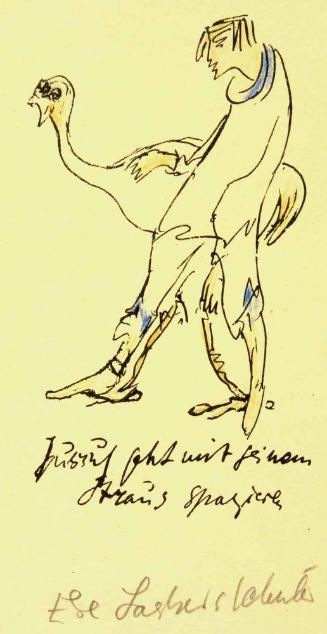
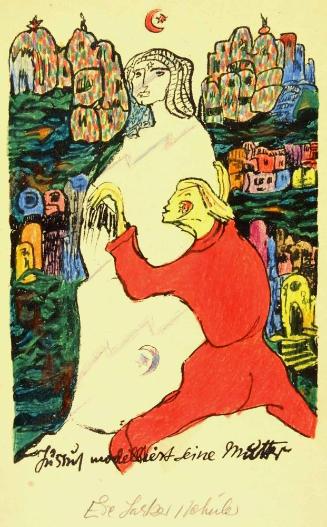
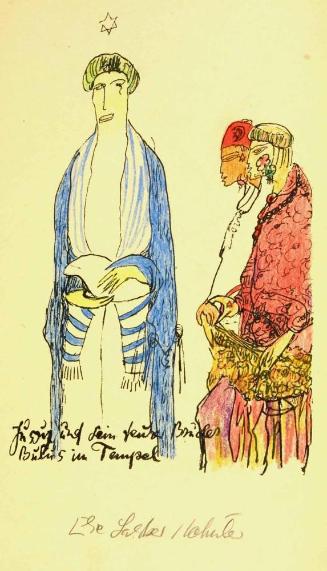
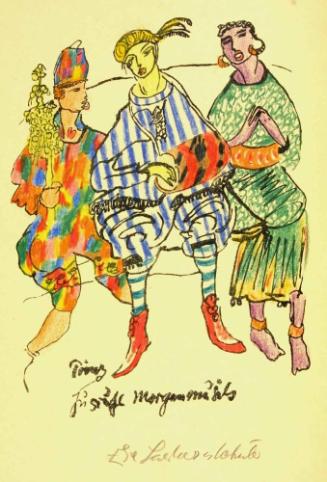
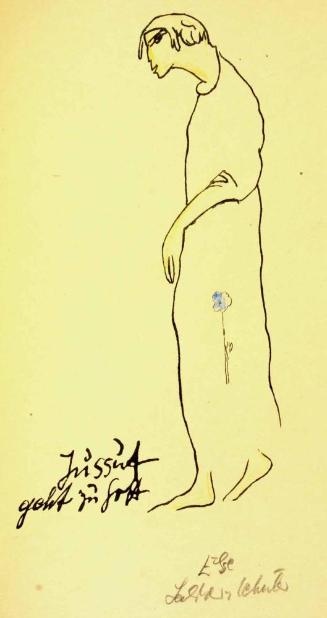
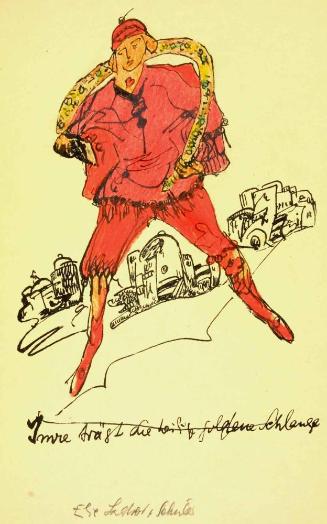
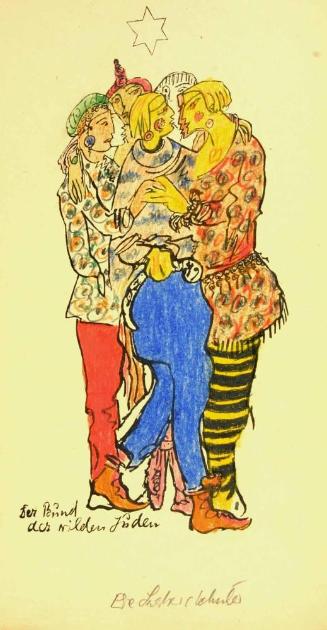
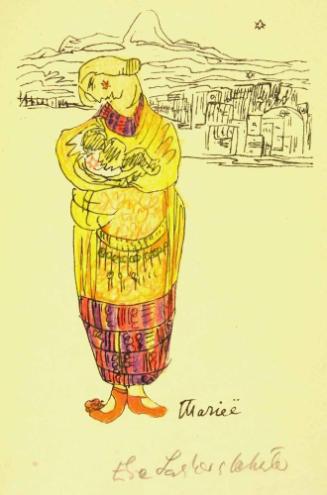
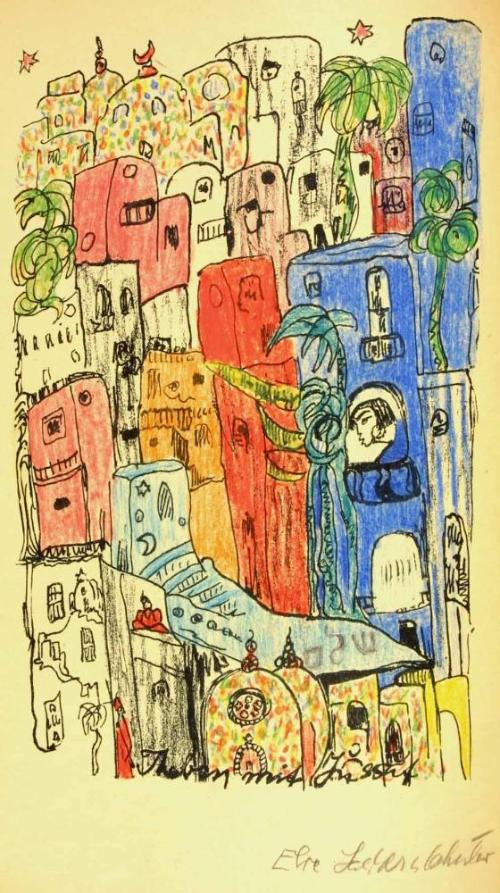
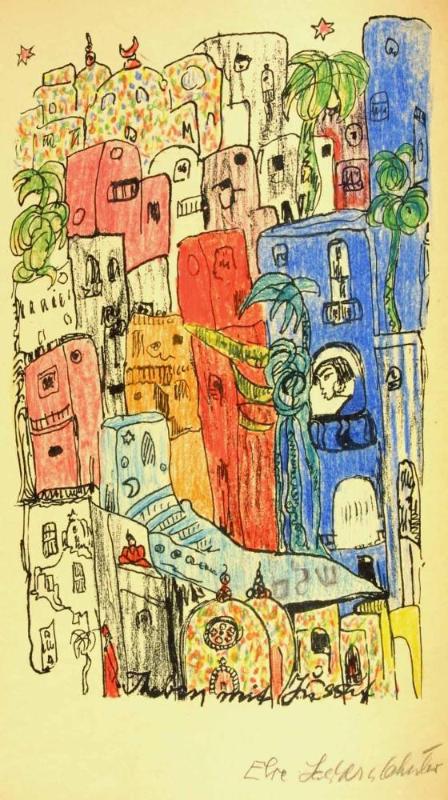
Lasker-Schüler’s depiction of Prince Jussuf of Thebes is based on the Legend of Joseph, which is recorded both in the Old Testament and in the Quran. Joseph, Jacob’s favorite son, is envied by his brothers, who sell him to Egyptian merchants; he spends many years at the Pharaoh’s court. His fate is emblematic of the lives of Jews in the diaspora, far from the land of Palestine.
With her pageboy haircut and baggy harem pants, the lyric poet and graphic artist Lasker-Schüler looks a lot like the Oriental prince. But the resemblance is not just visual: the character is an alter ego onto which she projects her fantasies and fears and through which she grapples with her outsider existence as a Jew in Germany. After the end of the First World War, the country’s anti-Semites regroup, agitating against the Jewish population and vilifying the Weimar Republic as a “Jews’ republic.” [Barbara Herzog, 2025]
With her pageboy haircut and baggy harem pants, the lyric poet and graphic artist Lasker-Schüler looks a lot like the Oriental prince. But the resemblance is not just visual: the character is an alter ego onto which she projects her fantasies and fears and through which she grapples with her outsider existence as a Jew in Germany. After the end of the First World War, the country’s anti-Semites regroup, agitating against the Jewish population and vilifying the Weimar Republic as a “Jews’ republic.” [Barbara Herzog, 2025]
Lasker-Schülers Darstellung des Prinzen Jussuf basiert auf der Josephslegende, die sowohl im Alten Testament als auch im Koran überliefert wird. Joseph, der Lieblingssohn Jakobs, wird von seinen Brüdern aus Neid an eine ägyptische Karawane verkauft und verbringt viele Jahre am Hof des Pharaos. Sein Schicksal steht sinnbildlich für das Leben der Juden in der Diaspora fern vom Land Palästina.
Mit ihrem Pagenschnitt und den weiten Pluderhosen ähnelt die Lyrikerin und Zeichnerin Lasker-Schüler nicht nur äußerlich dem orientalischen Prinzen. Sie vereinnahmt ihn als Projektionsfläche für ihre eigenen Fantasien und Ängste und thematisiert ihr Fremdsein als Jüdin in Deutschland. Nach Ende des Ersten Weltkrieges organisieren sich die Antisemiten neu, sie hetzen gegen die jüdische Bevölkerung und schmähen die Weimarer Republik als „Judenrepublik“. [Barbara Herzog, 2025]
Mit ihrem Pagenschnitt und den weiten Pluderhosen ähnelt die Lyrikerin und Zeichnerin Lasker-Schüler nicht nur äußerlich dem orientalischen Prinzen. Sie vereinnahmt ihn als Projektionsfläche für ihre eigenen Fantasien und Ängste und thematisiert ihr Fremdsein als Jüdin in Deutschland. Nach Ende des Ersten Weltkrieges organisieren sich die Antisemiten neu, sie hetzen gegen die jüdische Bevölkerung und schmähen die Weimarer Republik als „Judenrepublik“. [Barbara Herzog, 2025]