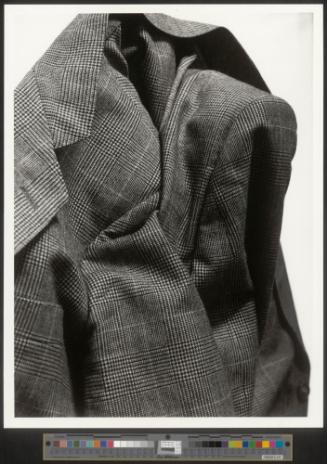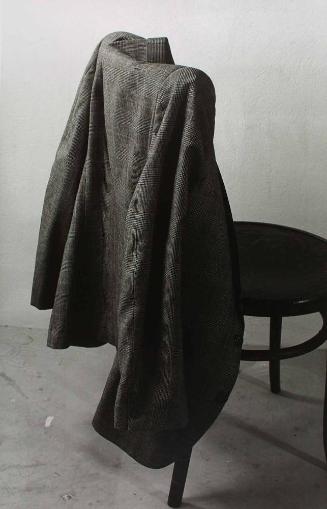
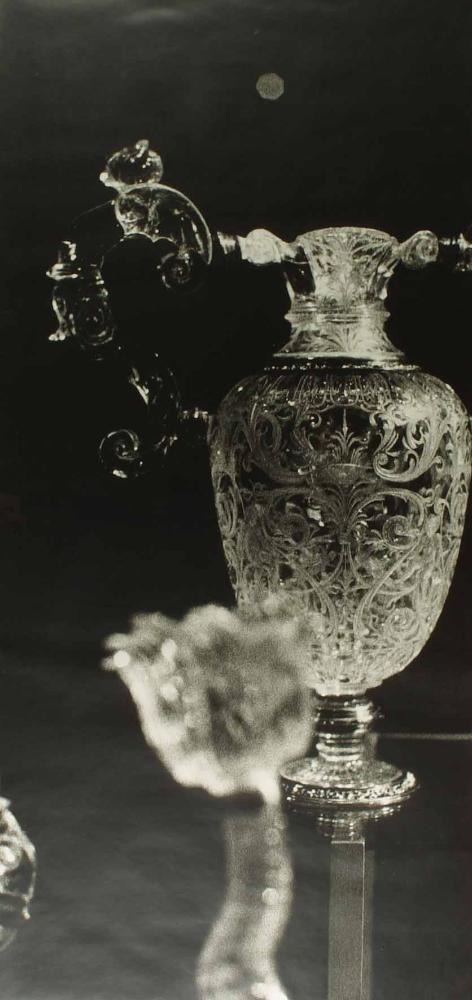

Aus dem Fundus (Diptychon)

Date1991
MediumSilbergelatineabzug
Display DimensionsFoto: 130 cm × 63,5 cm
ClassificationsFotografie
Credit LineFotosammlung des Bundes am Museum der Moderne Salzburg
Object numberDLF 704_1-2_1
Provenance1992 Dauerleihgabe
DepartmentFotosammlung des Bundes
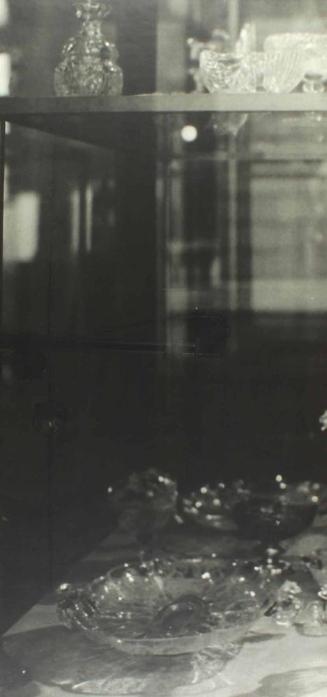
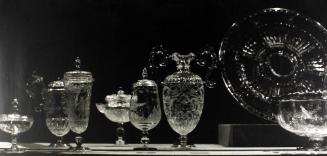
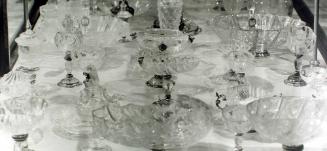
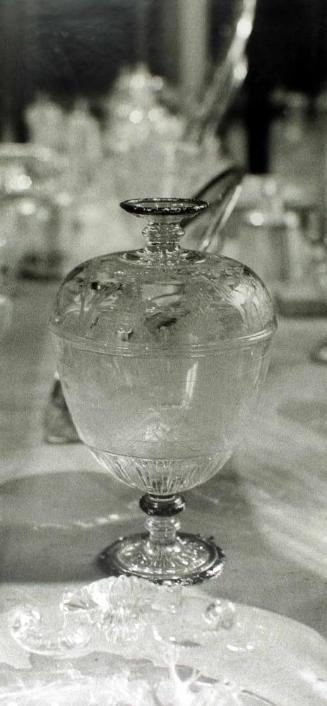
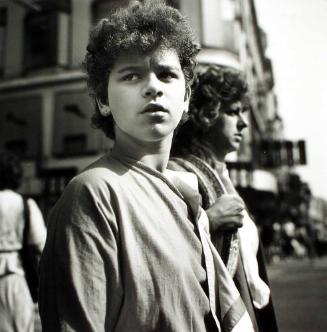
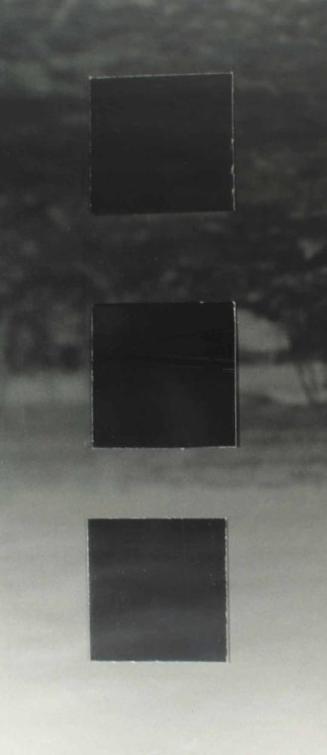
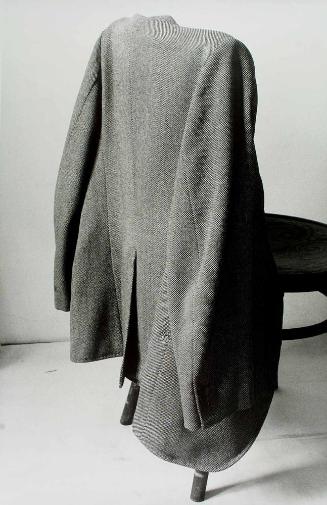
About the workFor Leo Kandl, the still-life genre is never an end in itself. He is not hunting down the mere object quality of the items he focuses on. He doesn’t investigate the aesthetic allure of the things and their isolated presence in the image, as was characteristic for Bauhaus photography and New Objectivity. For Kandl, his “Versatzstücke” or “props” are agents of a larger context represented by these objects.
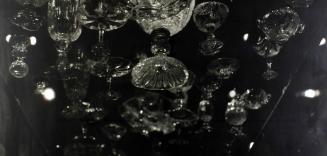
The museum as treasure chest, the showcases as sites of display, the arrangements of museum objects as proof of meaningful relations: in the “Versatzstücke” and “Aus dem Fundus” series, Kandl shows a number of precious objects from the Kunsthistorischen Museum in Vienna: splendid vessels of mountain crystal intended for princely tables. They represent the treasures of nature that were introduced into the art context for an unfolding of splendor unattainable without the exploitation of both nature and people; and equally, for the temporariness of such representations, which ultimately land as dead matter in the closed containers of the museum collection. A further connotation is connected with these objects: the qualities interesting for photography of transparency and reflection, of light and shadows reflected on artifacts whose contours and volumes are drawn by light-dark effects. [Margit Zuckriegl, 2015]
The museum as treasure chest, the showcases as sites of display, the arrangements of museum objects as proof of meaningful relations: in the “Versatzstücke” and “Aus dem Fundus” series, Kandl shows a number of precious objects from the Kunsthistorischen Museum in Vienna: splendid vessels of mountain crystal intended for princely tables. They represent the treasures of nature that were introduced into the art context for an unfolding of splendor unattainable without the exploitation of both nature and people; and equally, for the temporariness of such representations, which ultimately land as dead matter in the closed containers of the museum collection. A further connotation is connected with these objects: the qualities interesting for photography of transparency and reflection, of light and shadows reflected on artifacts whose contours and volumes are drawn by light-dark effects. [Margit Zuckriegl, 2015]
Das Genre Stillleben ist für Leo Kandl niemals Selbstzweck. Er ist nicht der bloßen Objektqualität der von ihm anvisierten Gegenstände auf der Spur. Er untersucht nicht den ästhetischen Reiz der Dinge und deren isolierte Präsenz im Bild, wie es für die Bauhausfotografie und die Neue Sachlichkeit charakteristisch war. Für Leo Kandl sind seine „Versatzstücke“ Stellvertreter eines größeren Zusammenhangs, den diese Objekte repräsentieren.
Das Museum als Schatzkammer, die Vitrine als Ort der Zurschaustellung, die Anordnung von musealen Objekten als Beleg für inhaltliche Bezüge: Leo Kandl zeigt in den Serien „Versatzstücke“ und „Aus dem Fundus“ eine Reihe von kostbaren Gegenständen aus dem Kunsthistorischen Museum in Wien. Es handelt sich um Prunkgefäße aus Bergkristall, die für fürstliche Tische gedacht waren. Sie stehen für die Schätze der Natur, die in den Kunstkontext eingeführt werden, für eine Entfaltung von Pracht, die ohne Ausbeutung von Natur und Menschen nicht möglich gewesen wäre, und gleichermaßen für die Zeitlichkeit solcher Repräsentation, die letztendlich als totes Material in den verschlossenen Behältern der Museums-sammlung landet. Eine weitere Konnotation ist mit diesen Objekten verbunden: die fotografisch interessanten Eigen-schaften von Transparenz und Reflexion, von Licht und Schatten auf Gegenständen, deren Konturen und Volumina durch Hell-Dunkel-Effekte gezeichnet werden. [Margit Zuckriegl, 2015]
Das Museum als Schatzkammer, die Vitrine als Ort der Zurschaustellung, die Anordnung von musealen Objekten als Beleg für inhaltliche Bezüge: Leo Kandl zeigt in den Serien „Versatzstücke“ und „Aus dem Fundus“ eine Reihe von kostbaren Gegenständen aus dem Kunsthistorischen Museum in Wien. Es handelt sich um Prunkgefäße aus Bergkristall, die für fürstliche Tische gedacht waren. Sie stehen für die Schätze der Natur, die in den Kunstkontext eingeführt werden, für eine Entfaltung von Pracht, die ohne Ausbeutung von Natur und Menschen nicht möglich gewesen wäre, und gleichermaßen für die Zeitlichkeit solcher Repräsentation, die letztendlich als totes Material in den verschlossenen Behältern der Museums-sammlung landet. Eine weitere Konnotation ist mit diesen Objekten verbunden: die fotografisch interessanten Eigen-schaften von Transparenz und Reflexion, von Licht und Schatten auf Gegenständen, deren Konturen und Volumina durch Hell-Dunkel-Effekte gezeichnet werden. [Margit Zuckriegl, 2015]
Bibliography
- ÖKat Sal MdM 395Leo Kandl : Otto Breicha-Preis für Fotokunst 2015SalzburgMuseum der Moderne Salzburg201521
- ÖKat Sal MdM 358Schaufenster zur Sammlung I : Orte der Kunst ; Werke aus der Fotosammlung des MdM Salzburg, des Bundes und der Sammlung Fotografis Bank AustriaSalzburgMuseum der Moderne Salzburg20126illustrated